🌼 DaisyChain-Web: train a language model with friends or by yourself with multiple devices, in the browser, no install
Open a webpage, share a room link, and every device that joins becomes part of the training cluster. Phones, laptops, old PCs: they connect peer-to-peer over WebRTC and train one shared transformer together, entirely in the browser.
What's actually happening under the hood:
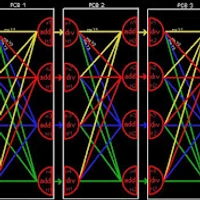
🧠 A mini transformer LM trains on FineWeb-Edu, streamed live from the HuggingFace Hub. Each device pulls its own slice (data parallelism), tokenized with our 16.5k-token Spikewhale tokenizer ⚡ Every single multiply runs through verified INT8 neural units, no float fallback. On WebGPU browsers it uses the GPU's DP4A integer dot-product hardware, admitted only after proving bit-identical results against the verified units, with a 3×INT8 fast-accurate scheme (CUTLASS's 3xTF32 trick, ported to 8-bit) 🔒 Devices average gradients every step under a sync guard: a per-step roster protocol plus weight-hash verification keeps every device's model bit-identical. If anything drifts, training stops instead of silently forking 📊 Live logs show exactly what every device contributes, step by step 💾 When you're done: test generations right on the page, download a checkpoint, or grab the inference kit, a single self-contained HTML file with the weights baked in that runs generations offline, anywhere Works solo too. Every extra device just grows the effective batch.
Most generative AI training data is crawled without consent. Your text gets summarized, images reprocessed, videos clipped — with no way to prove you're the original creator. Existing watermarks are either visible or wiped out by a single AI preprocessing pass.
Detect Before, Track After
Pre-embed — Detect theft without any watermark. Text plagiarism check, image similarity analysis (perceptual hash, SSIM, color histogram, feature matching), and video temporal matching catch copies, edits, and excerpts.
Post-embed — Embed invisible multi-layer watermarks. If one layer is destroyed, others survive independently. Even full removal leaves forensic traces as evidence.
Text: 4 Independent Layers
Four mechanisms work simultaneously: zero-width Unicode characters at morpheme/word boundaries (Korean Kiwi + English NLP), style fingerprinting via synonym-ending-connective substitution, SHA-256 timestamped evidence packages, and punctuation-anchored micro-marks. Each layer uses a different Unicode category, so attacks on one cannot eliminate the others. Full bilingual support, zero readability impact.
34-Attack Defense
7 categories, 34 attacks simulated: Unicode normalization, invisible character removal, homoglyph substitution (9,619 confusables), and AI rewriting. Each scored on Signal (watermark survival) + Trace (forensic evidence of attack) — proving deliberate removal even when watermarks are destroyed.
Image & Video
Images: DCT frequency-domain watermarks surviving JPEG compression and resize. Videos: keyframe watermarking with temporal propagation and majority-vote extraction. Both support pre-embed similarity detection.
Who Is This For
Creators, rights holders needing legal evidence, media companies, and organizations tracking document leaks. Korean/English bilingual, open source, Gradio-based.